
Naperville families are paying roughly 60 cents more per gallon of regular gas than the national average, and the price squeeze traces directly to a string of refinery breakdowns less than an hour's drive away.
The Chicago metro average for regular unleaded hit $4.83 per gallon on Oct. 22, according to AAA. The national average sat at $4.27. Diesel in Illinois averaged $6.56 per gallon, down from a record $6.83 on Sept. 23 but still nearly 80% higher than a year ago.
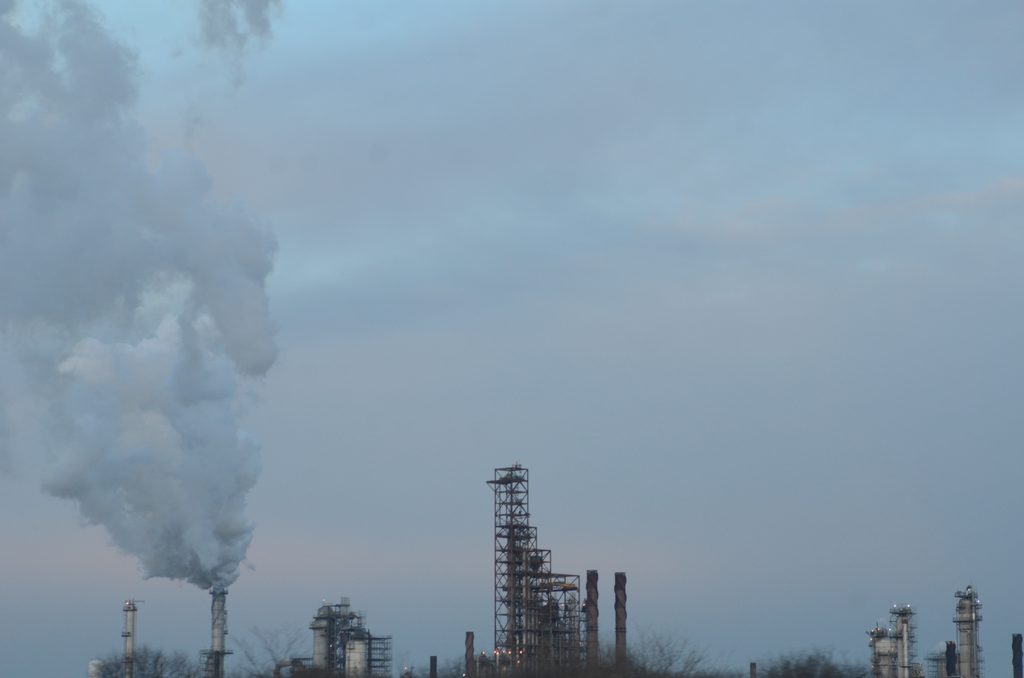
Three overlapping refinery disruptions across the Great Lakes region are behind the spike, according to RE Journals. The ExxonMobil refinery in Joliet, a 275,000-barrel-per-day plant in Will County that produces roughly 11 million gallons of gasoline and diesel daily, suffered a total power outage on Sept. 13 that forced an emergency shutdown. Flames and black smoke from the plant's flare system were visible on site, according to industry publication ChemNet.
That facility alone accounts for about 6% of all Midwest refining capacity. Its fuel feeds pipelines serving Illinois, Indiana, Iowa, Michigan and Wisconsin.
ExxonMobil had not finished recovering when a new problem hit.
On Oct. 20, the company shut a 50,000-barrel-per-day catalytic reformer at the same Joliet plant after Wood Mackenzie observed decreased stack activity and elevated flaring, Texas Energy Report reported Oct. 22. An ExxonMobil spokesperson said Oct. 21 that the company was working to resolve an operational issue but provided no restart timeline.
The Joliet outages coincided with planned maintenance at the Cenovus refinery in Lima, Ohio, which took another 185,000 barrels per day offline starting in September, according to RE Journals. The BP Whiting refinery in Indiana, the Midwest's largest, has also been running with restricted capacity. About 800 BP workers have been locked out since March 19 in a contract dispute with the United Steelworkers, In These Times reported.
What Naperville residents are paying
The Bureau of Labor Statistics reported that gasoline prices in the Chicago-Naperville-Elgin area rose 6.3% from August to September. Year over year, the gasoline index climbed 28.9%.
The pain extends well beyond the pump. Naperville Unit District 203, which runs more than 120 diesel-fueled buses for roughly 16,000 students, expects to spend an extra $300,000 on fuel during the 2026-27 school year if diesel prices hold, the Chicago Tribune reported. The district allocated $15.6 million for transportation this year out of a total budget exceeding $370 million. It already faces a $3.9 million deficit driven partly by declining enrollment.
Lisa Xagas, District 203's assistant superintendent of strategy and engagement, told the Tribune the district optimized bus routes in the spring, saving an estimated 900 miles per day. "We have not talked about not having field trips or not having transportation services for events, and we hope that we don't get to that point," Xagas said.
How long the squeeze may last
Patrick De Haan, head of petroleum analysis at GasBuddy, told the Tribune that diesel prices may decline slightly in the weeks ahead as the Joliet plant resumes operations. Per-gallon diesel had already dropped more than 25 cents since the Sept. 23 peak.
Longer-term relief is uncertain. De Haan said whether prices ease over the next six months depends on geopolitical developments involving the U.S., Ukraine and Iran. Wars in both regions have disrupted global oil supplies since early 2026.
RE Journals noted that much of the current pressure stems from a temporary regional bottleneck and that prices should stabilize as the Joliet refinery returns and BP Whiting's maintenance ends. The Oct. 20 catalytic reformer shutdown at Joliet complicates that forecast. ExxonMobil has not disclosed a restart date for the unit.