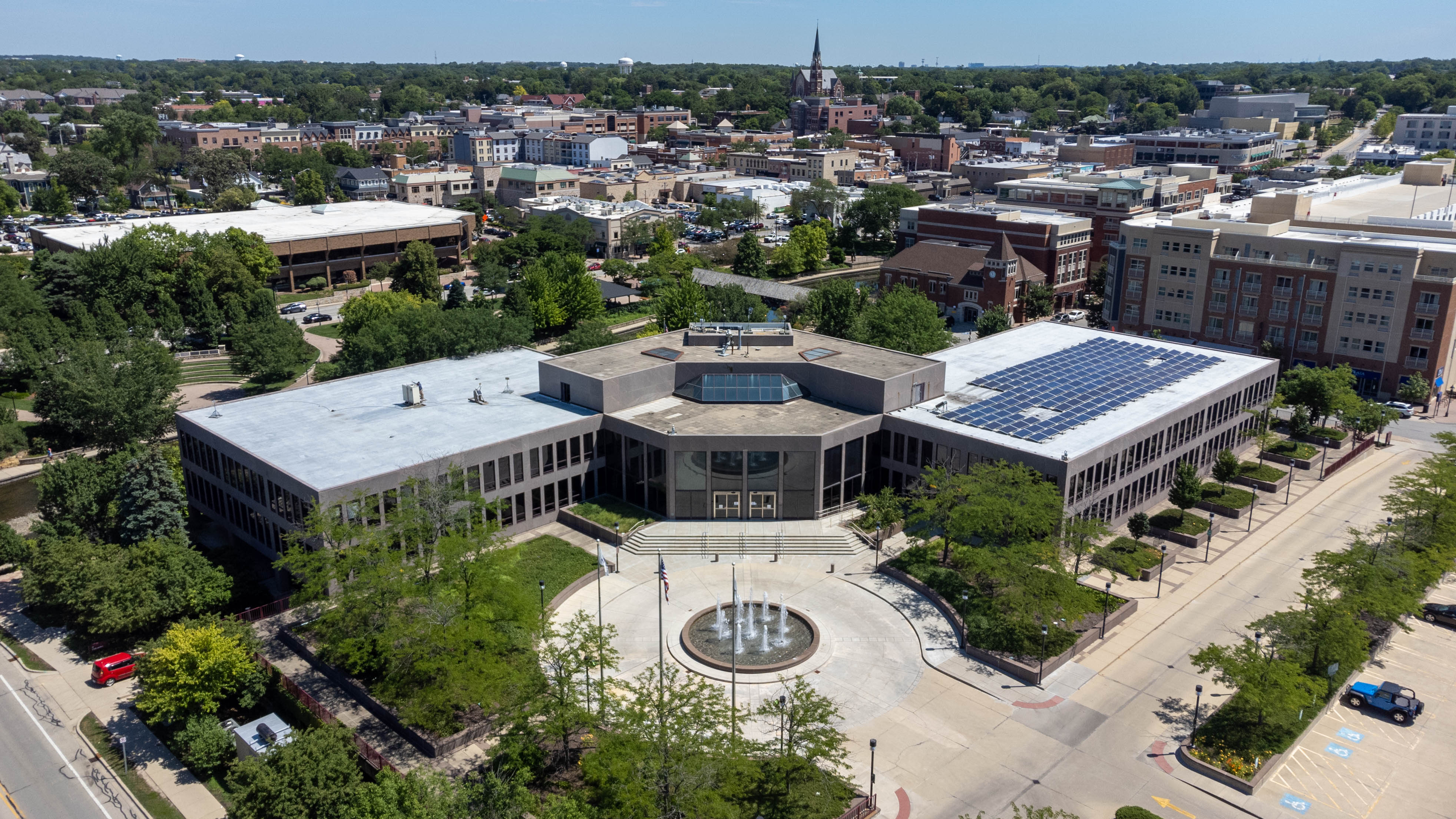
Naperville electric customers could see higher rates and slower storm restoration if the city sells its 125-year-old utility to ComEd, City Manager Doug Krieger warned council members at their Tuesday, Aug. 18 meeting. Multiple council members responded by calling the sale the least attractive of four options they'll weigh at a workshop Monday, Sept. 28 at 6 p.m.
Krieger's presentation was the fourth and final in a summer-long series examining the city's energy future after its contract with the Illinois Municipal Electric Agency expires in 2035. The other three options: joining a different joint action agency, participating in the wholesale energy market while owning generation assets, and entering the market without owning assets.
ComEd is the only viable buyer. That means Naperville would have almost no leverage on price, Krieger told the council.
"One of the things we like here is we like control. It's one of the complaints with IMEA — we don't have enough control. If the utility is handed over to ComEd, your input goes even further down, and absent becoming a major shareholder, you're not really going to be able to control rates," Krieger said at the Aug. 18 meeting.
A sale would deliver a one-time cash payment to the city and eliminate ongoing financial risk from running the utility. But Krieger said current trends in the PJM wholesale electricity market point to rate increases and reduced reliability under ComEd ownership. City officials could find no example of a municipality that previously sold its electric system to ComEd. Krieger cited Bolingbrook's sale of its water utility to Illinois American Water as the closest parallel, noting that Bolingbrook staff told him they regret that decision.
Naperville's electric rates currently sit in what Krieger described in May as "a dead heat" with ComEd's. Councilman Ian Holzhauer said that parity exists only because the utility has effectively subsidized ratepayers by about 21%, not recovering the full cost of service. Holzhauer said the city's next electricity source should be a regulated entity that reports costs in a standard, comparable fashion.
Council members push back
Councilman Patrick Kelly called the sale "probably the least attractive of everything we've heard so far" and said it would be "the first on the chopping block" at the September workshop. Kelly also pointed to the utility's reliability, citing quick restoration after storms this summer. As reported by the Chicago Tribune, Kelly said at the same Aug. 18 meeting: "Generally, it just seems to me that true public utilities should remain public and not be privatized if you don't have to."
Councilman Nate Wilson said the city should "get moving sooner rather than later" on one of the remaining three options. Councilman Josh McBroom, also at the Aug. 18 meeting, said any sale price would have to be "a pretty high number" to merit consideration.
Emissions debate enters the picture
Theresa Hus of the Naperville Environmental and Sustainability Task Force urged the council to factor greenhouse gas emissions into its decision. NEST volunteers noted that just 11% of IMEA's electricity comes from non-emitting sources, compared to a 68% statewide average, according to Sustain Naperville. The average Naperville resident generates more than twice the electricity-related emissions of the average DuPage County resident, and unlike ComEd customers, Naperville ratepayers cannot choose a clean energy option.
Tim Ferritto, director of Affordable Naperville, presented an independent cost analysis showing annual expenses under market-participation scenarios could range from $46.4 million to $74.29 million depending on power source, with wind and solar well above IMEA's current costs.
What happens Sept. 28
The workshop agenda includes a review of the utility's mission statement, a recap of all four options, council evaluations and direction for staff. Krieger said he does not expect final decisions that night but believes some options could be eliminated. If the council ultimately pursues a sale, legal negotiations with ComEd would not begin until 2030.