
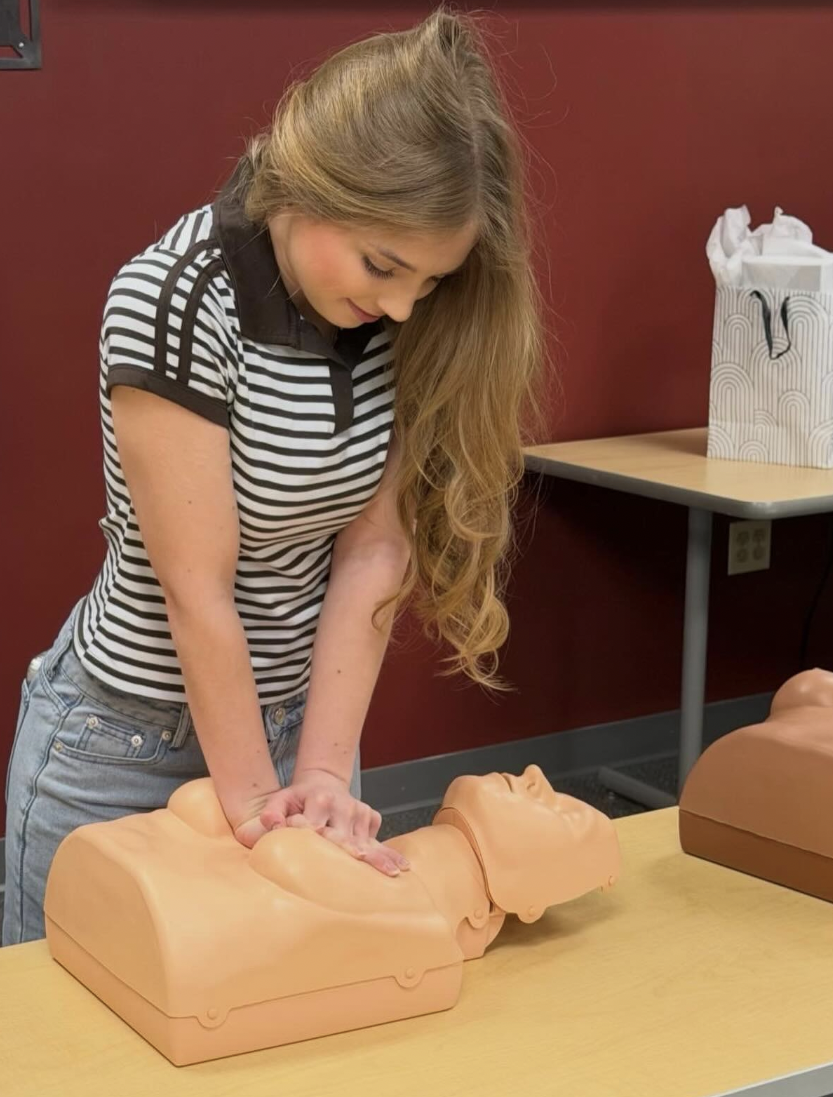
The next time a Naperville Central High School student practices CPR in health class, the manikin on the floor might actually look like half the people they'd need to save.
Ashlynn Goldstein, a Naperville Central student, worked directly with state Rep. Maura Hirschauer (D-Batavia) to develop House Bill 4788, which the governor signed into law Aug. 1. Starting in the 2029-30 school year, every Illinois secondary school will be required to provide CPR training using both breasted and non-breasted manikins, including through chest covers, so students practice performing compressions on both body types.
The law addresses a stark gap: women are 27% less likely than men to receive bystander CPR, according to the American Heart Association, as cited in the announcement from state Sen. Laura Ellman's office (D-Naperville). Rescuers often hesitate or feel unprepared. Current Illinois law already requires CPR and AED instruction in secondary schools, but the manikins used are consistently male-presenting.
Goldstein identified that disparity as part of her senior year capstone course at Naperville Central, the Chicago Tribune reported in March. She brought her research to Hirschauer, who sponsored the bill in the House. Ellman championed it in the Senate.
"It was an honor to work with Naperville High School student, Ashlynn Goldstein, to bring this life-saving policy forward," Hirschauer said in a statement announcing the signing. She added that mandating anatomically accurate manikins "will bring parity to bystander CPR and will save lives."
What it means for Naperville schools
The requirement applies to all four local high schools: Naperville North and Naperville Central in District 203, and Neuqua Valley and Metea Valley in District 204. Neither district has issued guidance yet on how it will comply or fund the new equipment.
The stakes are real. More than 350,000 cardiac arrests occur outside hospitals each year in the United States, and immediate CPR can double or triple a person's chance of survival, according to the American Heart Association. Advocates say training students on both body types removes a barrier that has contributed to lower survival rates among women experiencing cardiac arrest in public.
The law takes effect Jan. 1, 2027, though schools have until the 2029-30 year to implement the training requirement. The legislation does not specifically address accommodations for students with disabilities who may need modified CPR instruction.