Darrell Hanson says his grandchildren can't play in the driveway anymore.
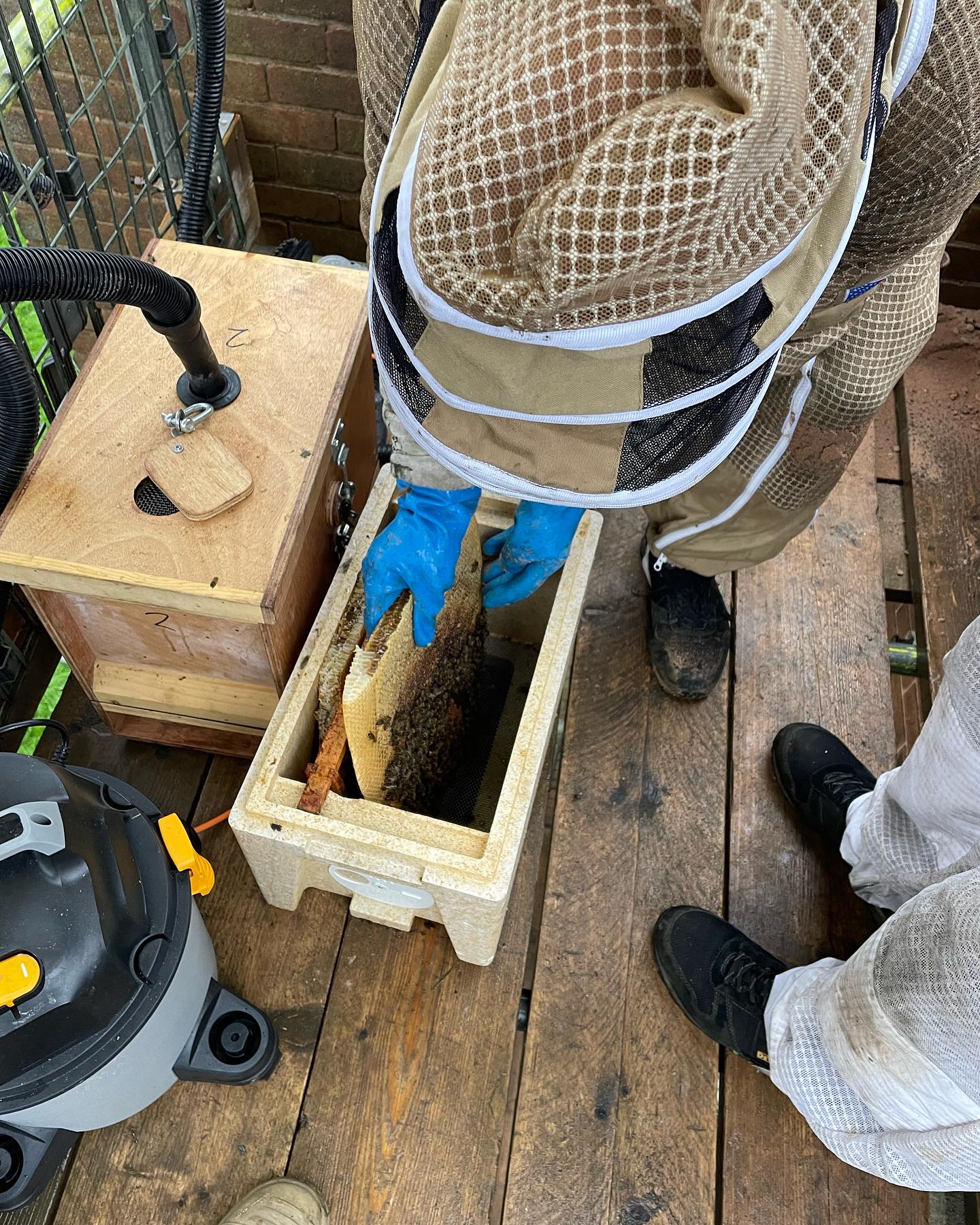
Hanson, 58, has lived on Columbia Street between Porter and Prairie avenues in downtown Naperville since 2007. But in the past year, three beehives kept by his next-door neighbor have made his property feel uninhabitable, he told the Naperville City Council on Tuesday, July 21. His neighbor dons a full protective suit to tend the hives. Five feet away on the other side of the fence, Hanson said, his family runs from the bees.
"He's in a full protective suit when he's dealing with his hives, and five feet on the other side of our fence, I'm swatting at bees nonstop and my family's running from them," Hanson told the Naperville Sun. "My grandchildren can't even come over and play on the driveway."
The council held a first reading on a proposed amendment to the city's beekeeping ordinance that night, the first proposed change to the 2016 rules. No vote was taken. A second reading could land on the Tuesday, August 18, council agenda or be pushed to the first meeting in September, City Manager Doug Krieger said at the meeting.
What staff proposed
City staff, led by Transportation, Engineering and Development Director Jennifer Louden, recommended five changes:
- Triple the required setback from property lines, from 5 feet to 15 feet.
- Require flight paths into the hive to remain within the owner's lot.
- Mandate an on-site water source for bees.
- Require a minimum 6-foot-tall solid fence no more than 5 feet from the hive entrance, extending at least 2 feet on either side.
- Establish rules for neighbor notification and signage.
Staff based the recommendations on a review of surrounding municipalities' ordinances and the Illinois State Beekeepers Association's Best Management Practices document. Notably, the ISBA's own 2018 guidance recommends barriers of only 4 feet, not 6. The city's proposed fence requirement is stricter than the industry standard it cited.
Neither side is satisfied
Hanson wants beehives banned outright from high-density downtown neighborhoods. The proposed setback changes don't go far enough for him.
Local beekeepers say the changes go too far and lack scientific grounding. Chong Yi, owner of Yi's Bees and Trees and a Naperville resident, told the council that bees travel two to three miles when foraging and will cross property lines regardless of any setback or fence. Tripling the distance from 5 to 15 feet, Yi argued, will not meaningfully change where bees fly.
Robert Fieseler, a former Naperville city councilman and beekeeper, opposed the 6-foot solid fencing requirement, arguing that mature vegetation produces the same result and screens hives more effectively.
Beekeeper Simone Schuppan noted that beekeeping is already a regulated hobby subject to routine inspections.
Council divided
Council members were reluctant to act. Councilman Josh McBroom said he didn't want to support an ordinance that has no impact and takes a hobby away from people. Councilman Ian Holzhauer said he found all presentations compelling but didn't want to rush legislation without understanding its effects.
Councilwoman Mary Gibson was the most direct: she said she would prefer the ordinance not come back at all, and if it does, she would vote to leave it as-is. Louden told the council that in the decade since the 2016 ordinance was established, the city has received only three beekeeping complaints.
Mayor Scott Wehrli sided with Hanson's concerns, citing the current ordinance's lack of best management practices and noting that millions of Americans have severe allergic reactions to bee stings.
What's next
Krieger said staff will decide by approximately Tuesday, August 5, whether to place the item on the Tuesday, August 18, agenda or move it to the first September meeting. The council's next regular meeting is Tuesday, August 18. The agenda for that meeting has not yet been published; check naperville.il.us.
The neighbor who owns the three Columbia Street hives has not been identified in public coverage. Hanson said he contacted both the city and the Illinois Department of Agriculture before bringing the issue to the council in June and found no resolution.